Showing posts with label About. Show all posts
Showing posts with label About. Show all posts
Book Review : मैले देखेको दरबार -- Maile Dekheko Darbar (The Palace that I saw) by Bibek Shah
 |
| Maile dekheko Darbar Book Cover. |
The book is not any milestone in nepali literature. The author also does not belong to any literary background. Therefore, the book should be understood as his memoir of the events which he saw while being at the duty and which he could make note of in his diary. The events are mostly based on his memory while being at royal duty and during his four years' tenure of military secretary of royal palace.
The book starts with the events leading to his resignation. However, it is not clear to him why his resignation was asked by Nepal's Last King Gyanendra Shah. The reason might be that King Gyanendra Shah did not appreciate very straight nature of Mr. Bibek Shah that he could call 'Spade' a Spade. Most probably, King Gyanendra Shah thought Mr Bibek Shah was uncooperative on the way of king's ambition of becoming a King "who can see and hear things".
The memoir also talks about the Royal Massacre of 2001. Initially, when the book was published, it was advertised as a book of sensational revelation about royal massacre. However, the book does not reveal anything new which is not in public domain. The author states that the royal massacre was one' man act - the act of late King, and the then crown prince Dipendra. However, the book makes certain issues open regarding the motives of crown prince. The obvious reason was mainly the Queen Aishwarya's refusal to accept Devyani Rana as wife of crown prince. The author says that some external and foreign forces might have taken advantage of crown prince's frustrated mind and may have provoked him to carry out the royal massacre in 2001. May be! May be not.
Another aspect that book reveals is the army and king/palace relationship in Nepal.It seems that all security forces at that time were directly responsible to the King and Nepal's Kings - at the time of Birendra and Gyanendra actively took part in promotion, appointment, and even transfer of Police and Army Officers. The book reveals the inter - security force's mistrust among each other and politics in between.
As the author comes from a Nepal's Army/Military background and as he served in Palace for many years, he shows unflinching support to Nepal Army and Palace's actions. He sees only the Army and Royal Palace as a center of unity and truly nationalist forces. Though he shows his faith in multi-party system, he is suspicious of Nepal's Leader's characters and activities.
The book also delves into the Nepal's political Parties' double standards, carelessness towards the plight of common men, their focus only to cling to power and their unholy alliance with foreign powers - especially with India. The book here and again, portrays a very critical and poor picture of Indian establishment and their two faced characters when they pretended to help Nepal Army but also gave shelter to Maoist Terrorists. The book makes it clear that India had a very long hand to decide significant issues concerning Nepal and Nepalese and it always wanted to weaken the nationalist forces in Nepal. India's this policy has become very clear from its efforts to bring Maoists and Political parties closer by creating situations where King was pushed to another corner.
Since the book runs 600 pages, we must say that it contains many unnecessary details in the books which do not in anyway, substantiate the content. There are few instances which have been repetitive in the book only to increase the unnecessary pages. The Author at the start says that he had to shorten his diary and details to keep the book short. However, it feels that there were more need of such slicing of details which were not any enriching to learn. The books also contains so many unheard names of Army Officer's without any reference to who they were and how they were related to King or to Palace or to any other influential power centers. Since they were his friends and colleagues, he had to mention many names in the books while explaining the events of that time.However, for readers, it will not give any insights.
There are also other instances where the author could have elaborated more by tracing history and historical events. For example, he refers to King Birendra's comment while referring to Chief of Nepal Army, King Birendra is said to have commented, "The Army Chief still has hang over of Shri Tin/Rana Prime Minister". This shows that the Army Chief had some connection with former Rana Prime Ministers of Nepal but we do not know. In another instance, King Gyanendra is said to have commented," ..........has blood of Chandra Shamsher and can not be trusted" while referring some Army Personnel. The Author must have taken the readers back to history to unravel what these kings were referring to.
I believe the Author tries to be as honest and as objective as possible while evaluating other peoples, foreign powers and situation of the country. However, I feel there was a need of self - critical assessment of his role during the royal massacre in Nepal and his role, if any, in making King Gyanendra an autocrat. In this aspect, the book is silent.
Finally, the book chronicles his rise and performance in Nepal Army. Coming from remote Western Nepal, his rise in Nepal's army is a sort of meteoric. Without having any connection in Nepal Army, he rose to a position and this shows that Nepal Army was to an extent free and fair organisation if you had talent and ability. We hope that this will continue in the future in the Army and similar fair process will be adopted in all kinds of government recruitment. Mr. Bibek Shah was therefore, little worried about the conduct of Army Chief Rookmangad Katuwal who took second man in Army before politicians for introduction.
Therefore, to summarize the review, I would say that the book must be looked as an honest attempt of a nationalist ex-army to chronicle his memory based on facts and events. He has been able to give his own interpretations of events and many of them are not far from truth, or not far from our own (common man's) assessments.
Download Maile Dekheko Darbar PDF today.
This book review was first published here.
“Saya” book review
 There is no doubt that Subin Bhattarai’s Saya, the sequel to his bestselling Summer Love, will become an instant hit and the next big thing for Nepali youngsters, especially for those who rise and fall in the deluge of love or for those in pursuit of a special one. But that is to be expected, given the fame of the author, who inspires a massive craze amid his target audience, as exemplified in the massive crowd that gathered for the launch of his book.
Subin Bhattarai has undeniably created a space of his own, a strong enough foothold with his first collection of short stories, Kathaki Paatra, the novel Summer Love and now its sequel, Saya. Bhattarai displays a Chetan Bhagat-ish flamboyance in the way his narrative slithers, keeping readers within its grip, and is by and large, pretty successful in doing so. Another factor that might attract young readers is the simplicity of Bhattarais’ language and easily identifiable, not-so-larger-than-life characters. Saya’s presentation is appealing and one doesn’t have to make any great effort to comprehend the book.
However, very often, I have come across remarks that imply that we cannot expect too much from novels like these, which are targeted more towards the mass than the literary class. I did not have any such expectations. I would have been greatly disappointed if I had looked for literary value in something that is to be read extensively for pleasure purposes, nothing more and nothing less. But there are many questions that arise with this sequel. What was reason behind writing Saya at all? Is it purely to earn more moolah by selling a woman’s perspective, which hadn’t been delved into earlier in Summer Love? Or would it add more value to Summer Love by justifying Saya’s melodramatic exit from Atit’s life? Was this really necessary? Is it an effort to bring some paramount change in the gaze towards chick-lit? Or was it a demand from the great fan following? While Bhattarai’s fans must have been thrilled at the prospect of a sequel, the writing of the book itself seems to be a decision taken in a jiffy, certainly not a very good move as the writer is less successful in living up to the standard that Summer Love set with its open ending.
The book begins in a strikingly similar manner as Summer Love, with Saya, the protagonist, recounting her side of story to a certain écrivain in a café. The prologue and the first few chapters begin with profound insight on love and life. Saya and Atit, her lover from Summer Love, seem to have matured with the passing of down-in-the-dumps time in each other’s absence. The author appears to be at ease with exploring the grim side of lost love and the acceptance that comes through endurance, which is very charming. But what starts off as a promising beginning does not retain the same intensity for long. The characters fall flat with their mediocre portrayal. The ‘Sushmita’ episode is exhaustingly banal and the middle section of the novel becomes quite chimerical. It is strange that there is not even an iota of awkwardness in Atit and Saya’s reunion—they behave like teenagers in love for the first time despite having gone through so much upheaval and disappointment at the cost of each other in the previous book. Bhattarai has made an attempt to add some light moments, but the crisp repartees that Saya and Atit shared in Summer Love has been replaced with dialogue that is shoddier.
Right from the beginning, it is evident that the author is confined to a boundary, deliberately trying to justify the ending to the readers by adding bits and pieces. While there are pleasing moments, like Atit re-discovering his bond with the family and reminiscing about his childhood—something that was missing in Summer Love, there are also incidents that only seem to provide filler to the book, like the trip to Goa, which has no significance as such to the plot. Again, the entry of Sujan, the suave, sacrificing complement to the budding love triangle, is very much like a poor copy of a Karan Johar flick.
Furthermore, it is strange that the author and the editor both failed to discern the difference between words such as ‘ignorance’ and ‘indifference’ or ‘complex’ and ‘complexion’. I am unaware if language should be observed this carefully but the use of words such as ‘letiraheki’ or ‘laapata’ could easily have been replaced with better words like ‘paltiraheki’ or ‘dhalkiraheki’ and ‘bepattaa.’
The end to Saya is overly dramatic and very self-evident, unlike that of Summer Love. Perhaps giving it a slight twist would have made for
a better ending. Though not outstanding, I loved Summer Love more and I still love Atit more as a protagonist; Saya as a girl caught in her own dilemma doesn’t carry the same appeal. She comes across as a rather selfish person, who uses not only Atit but also Sujan as per her own will and convenience.
Saya and the author both seem to be caught in the crux of modernity and convention. But after having reviewed the book in a way that could possibly be blasphemous to his fans, I wish Bhattarai had raised his own personal bar as a writer. Still, his language is beautiful and the reflective portions of the novel come across as delightful. Maybe in the future, a tearjerker would extract the best of his potentials.
- SAGUNA SHAH
This book review was first published on The Kathmandu Post found here.
About
,
Book Review
,
Novel
,
SAGUNA SHAH
,
Saya
,
Subin Bhattarai
,
Summer Love
,
Summer Love Sequel
Parijat | Bishnu Kumari Waiba
 Parijat was born in 1937 at the hill station of Darjeeling. Parijat, played an important and well-appreciated role in strengthening Nepalese literature. She completed part of her schooling in Darjeeling, she came to the Kathmandu Valley in 1954. She completed school at Padma Kanya School and earned a Bachelor of Arts degree. Suffering early on from physical ailments, at 26 she became paralyzed and was supported for much of her life by her sister. The publications from Sikkim and other parts of India published Parijat’s complete writings in six parts in the year 1997 calling it, “Parijat Ko Sankalit Rachana Haru”. In 1959, Parijat’s poem was first published by Dharti. She published three poetry collections: Akanshya, Parijat Ko Kavita, and Baisalu Bartaman. Her first short story was “Mailey Najanmayeko Choro”. She is, however, best known in Nepal as a novelist. Altogether, she wrote ten novels of which Siris ko Ful gained the greatest popularity. In 1965, she was awarded with the Madan Puraskar for the novel. She also received the Sarwashrestha Pandulipi Puraskar, Gandaki Basunahara Puraskar, and Bridabrit.
There are many traits of Parijat’s personality. Analyzing her multidimensional personality, Iswar Ballav said “Having the power to honor the special qualities of man, Parijat is regarded as the thinker of Nepali litrature. The biggest trait of her personality is humanity”. Twenty-three years prior to making this statement, the same humane litterateur had sarcastically analyzed hiw work. “Shirisk Ko Phool” had enhanced the literary personality of parijat. Her other writings due to the charm of her personality, physical condition and political situation. But the writings that were published had been the subject of talk in the literary circles. Although her writings were bring discussed, the language, style and conception of these writings could not compare with “Shirish Ko Phool”. It might be possible that having been written under intense mental and physical pain, her “Shirish Ko Phool” had become an epic. After that, her physical and mental pain increased but the _expression,! style and presentation of “Shirish Ko Phool” could not be surpassed and improvement in her writing style was not to be seen post “Shirish Ko Phool”. But she had given high priority to her writings after “Shirish Ko Phool”. She was litterateur having a lot of faith in psychology.
Parijat’s Writings
Total of twenty-one of Parijat’s writings (books) were published. Among those writings there were ten novels. Her Published novels are Shirish Ko Phool, Mahattahin, Bainsh Ko Manchhe, Tori Bari Bata Ra Sapana Haru, Antarmukhi, Parkhal Bhitra ra Bahira, Usle Roje KoBato, Anido Pahar Sangai, Paribhasit Ankha Haru and Boni. Parijat Published four story collections. Adim Desh, Sadak Ra Prativa, Salgi Ko Balatkrit Anshu and Badhshala Janda Aaunda. Her essays were Dhuppi Salla Ra lali Guransh Ko Phed Ma, Auta Chitramay Suruwat, Andhi akash and Adhyan Ra sangharsha. Besides, three poetry collections of Parijat were published Akanchha, Parijat Ko Kabita Haru (edited by Dr. Ishwar Baral) and Bainsalu Bartman.
Parijat’s literary Principles
“The country cannot develop unless there is development of litrature. It’s future is bright and the future of Nepali litrature is also bright. To creat literature is not my interest but my compulsion. When time disturbs my peace, only then does my pen move. I am a woman who seeks accepts and worships geniuses. The duty of a litrature is not to creat a hero. The work of a litrature is to pickup and present heroes. I take myself to be honest writer.My honesty might have made me anarchical and disloyal at times. I am not the type of personand I do not have the habit of getting confused when one calls a black object white. This is not my sense of pride. In the form of litrature, I feel myself so honest that at least I know the limits of my capabilities and the importance of my social responsibilities. "Parijat had said. She said"
Jhamak Kumari Ghimire
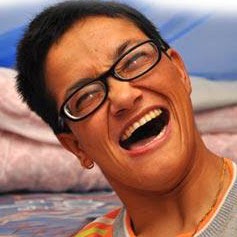 Jhamak Kumari Ghimire, born in July 1980 in Kachide village development of Dhankuta district is a Nepalese writer. She was born with severe disability that has prevented her from using her arms, and suffers from limited movement of her body and slurred speech called cerebral palsy and writes with her left foot. can hear but not speak and has limited eye sight. Ghimire also wears glasses because she has myopia, or nearsightedness. Her disability, however, hasn’t prevented her from expressing her acerbic, poetic humour freely ? through her left foot.Using her toes to write, she trod into the Nepali literature with the start of new millennium at the age of 19.Being deprived of an education didn’t stop her from learning how to read and write all by herself, and she has progressed so far along this path that she is today an award-winning author of 10 published books comprising both prose and poetry, mediums she traverses with equal,
heartfelt facility. In this chapter from Jiban Kanda Ki Phool, Jhamak describes the joy she felt when she first wrote the letter ‘ka’ in the dirt with a stick.In her autobiography, Ghimire documents instances such as her parents ignoring her desire to study or how she tried to memorize
the alphabets her younger sister was studying and practiced them by scribbling in the garden.
She learned to read and write using her feet and eventually launched an award-winning literary career. Ghimire promotes a message of self-sufficiency and empowerment for women.
 She has penned many anthologies of poems, stories and essays besides regularly contributing to newspapers as a columnist as She is columnist at the Kantipur newspaper.“Through her column, her potential has been acknowledged – nationally and internationally – not just because she can write with her feet, but because her writing is effective and efficient compared to the contemporary analytical litterateurs,” says Govinda Raj Bhattarai, a professor and writer who helped launch her book of autobiographical essays.
Her several feet-written interviews have been published by various media, one which helped launch her literary career.
In addition to working as a columnist, Ghimire has written about a dozen books in Nepali, including four collections of poems, a collection of essays, a collection of articles, an autobiography and two collections of stories that are currently on sale in the local market. She has won a number of national awards.She has won nearly a dozen national and regional literary awards since 1998, including one from the Nepali government.
 Despite being decorated with so many awards, Ghimire still considers the day her first book – a poetry collection – was published as the happiest day of her life.
Ghimire says that her earnings from her books have helped to support her family. But she says that because of patriarchal traditions, her family doesn’t like to acknowledge the financial contributions of their daughter.
“I want to tell all that this thought should be changed,” Ghimire says
“All our troubles are resolved if we remain self-dependent and self-sufficient.”-Jhamak Ghimire, writer
Now, Ghimire types her articles on the computer with her feet and can access the Internet for information.
She and others say her story shows this.
“In the past, I was a nuisance and a troublemaker for all, but the situation has changed today,” she says.
source:mynepal.com.np
गजल एक संक्षिप्त परिचय !!!
पृष्ठभूमि र परम्परा
 उर्दु भाषामा अत्यन्त विकसित साहित्यको श्रव्य बिधा गजलको जननी चाहि अरबी भाषा नै हो । उर्दु भाषामा अत्यन्त विकसित, लोकप्रिय र चर्चित भए पनि बिस्तारै-बिस्तारै यसको प्रभाव हिन्दी र नेपालीजस्ता भाषा साहित्यमा पनि भएको देखिन्छ । संरचनात्मक दृष्टिकोणबाट गजललाई नियाल्दा मुक्तक र लघुकथासंग धेरै नजिक देखिने भए पनि यसमा भावको त्रि्र विन्यास गरिएको हुन्छ । यो संगीत चेतनाका आधारमा गीत एवं बिम्ब-प्रतिक तथा उपमा, रुपक जस्ता अलंकारको प्रयोग र सौर्न्दर्य चेतनाको दृष्टिले पनि कविताको आस्वादन दिने साहित्यको एउटा संरचना हो । गजलले लगभग आठ-नौ सय वर्षो इतिहास बोकेको देखिन्छ । सुरुदेखि बर्तमानसम्म विद्यमान रहेका गजलभित्रका आफ्नै निजी तत्वहरुले यसलाई अरु बिधाबाट स्वतन्त्र अस्तित्व प्रदान गरेको छ । बर्तमान समयमा गजलले बृहत क्षेत्र ओगट्दै गएको देखिन्छ । हुनत गजलको मुल विषयबाद नै प्रेम भएको हुनाले र प्रमिका संगको बार्तालाब अथवा श्रृङ्गारिक अनुभुतिको भाषिक अभिव्यक्ति गजल हो भन्य मान्यता उत्पत्ति कालदेखि नै देखिदै आएको छ । त्यसैले यसले आजसम्म पनि श्रृङ्गारिक धरातललाई लिएरै हिडेको पनि देखिन्छ । तर, पूर्णरुपमा प्राचिन संरचनामा मात्रै गजल सिमित बनेको चाहि छैन । बर्तमानका गजलहरुमा प्रेमपूर्ण बिषय बस्तुले भन्दा ह्रासोन्मुख मानवीय मुल्य, सामाजिक असमानता, राजनैतिक विकृति, अत्याचार, कुरीति, शोषण, दमन, जीवनका निराशा, माटो अनि मुटुका सम्बन्ध तथा यथार्थ धरातलमा रहेर गजलहरुको सिर्जना हुन थालेको पाइन्छ ।
'गजल' अरबी भाषाको 'पोथी' वा स्त्रीलिङ्गी शब्द हो । अरबी भाषामा 'ग' भन्नाले 'वाणी', 'ज' भन्नाले 'स्त्री', 'अल' भन्नाले 'को' वा 'साथ' भन्ने हुन्छ । त्यसैले 'गजल' शब्दले दिने शाब्दिक अर्थ 'स्त्रीका साथ प्रयुक्त हुने वाणी' अर्थात् स्वास्नी मान्छेसँग गरिने वार्तालाप भन्ने बुझ्न सकिन्छ । गजलका सन्दर्भमा बिभिन्न विद्वानहरुले फरक फरक मत अघि सारेका छन् । कसैले यसको अर्थ प्रेयसीसंगको क्रीडा अनि कसैले नारीहरुको प्रेमको कुरा भनेर पनि अर्थ्याएका छन् । 'गिजाल'बाट गजल शब्द विउत्पन्न भएको हो भन्ने डा. कृष्णचन्द्र मिश्र जस्ता विद्वान पनि भेटिएका छन् । अरवी भाषामा पाइने 'गिजाल' शब्द 'गजाल'बाट बन्दछ । मिश्रले गजल शब्दको शाब्दिक अर्थ मृगशावक वा हरिणशिशु हुन्छ, अर्थात् 'शिकार खेल्दा जब शिकारीको वाँण हरिणको मुटुमा गई रोपिन्छ, त्यसबेला हृदयविदारक ढंगले हरिणले गर्ने आर्तनादलाई गजल भनिन्छ ।' त्यसैले गजलको उत्पत्तिगत दृष्टिले गजलकारको कोमल हृदयमा कुनै गहिरो आघात पर्दा त्यसबाट प्रस्तुत हुने कारुणिक तथा पीडाजन्य आन्तरिक अनुभुतिजन्य र प्रेमिकासँगको पिडासहित व्यक्त गर्ने शब्दजाल नै गजल हो ।
फारसी भाषामा गजलको अर्थ 'वाजनान गुफ्तगु करद न' वा 'आइमाईका कुरा' हुन्छ । आइमाईका कुरा एक बिषयमा केन्द्रित नहुने भएकाले र गजलका पनि हरेक 'शेर'हरु कुनै निश्चित विषयमा आबद्ध नभई आफैमा स्वतन्त्र देखिन्छन् । तर्सथ अर्थका दृष्टिले गजल एकतामा अनेकता र संरचनात्मक दृष्टिले अनेकतामा एकता हुने सुललित भाषिक अभिव्यञ्जना हो ।
गजलको परिभाषा
गजलको परिभाषा दिने क्रममा विभिन्न ठाउँमा वेग्लै तरिकाले अर्थ्याउने भएकाले अन्य विधाहरु जस्तै यसमा पनि मतैक्यता भने पाइदैन । गजलका बारेमा प्रस्तुत भएका केहि विचार वा मतलाई प्रस्तुत गर्नु सान्दर्भिक र्ठहर्दछ ।
१) बृहत नेपाली शब्दकोशका अनुसारः- 'विशेषतः प्रेमका विषयमा श्रृङ्गार रसका कविता लेखिने एकप्रकारको फारसी छन्द वा त्यसै छन्दमा लेखिएको कवितालाई गजल भनिन्छ ।'
२) उर्दु-हिन्दी शब्दकोशका अनुसारः- '५ देखि ११ शेरहरु हुने उर्दु र फारसी कविताको एक प्रकार गजल हो । यसका सबै शेर एउटै रदीफ एवं काफियामा आबद्ध हुन्छन् र प्रत्येक शेरको विषयवस्तु फरक हुन्छ । पहिलो शेरलाई मत्ला भनिन्छ, जसमा दुबै मिसरा अनुप्रासयुक्त हुन्छन् भने अन्तिम शेरलाई मकता भनिन्छ, जसमा गजलकारले आफ्नो उपनामको प्रयोग पनि गर्न सक्छ । गजलको संग्रहलाई दीवान भनिन्छ ।'
३) द अक्सफोर्ड इङ्लिस डिक्सनरीका अनुसारः- 'विशेषतः प्रेमसम्बन्धी वा रागात्मक, पुरानो, लयात्मक कविताको एक प्रकार हो, जसमा सीमित श्लोक, उही अनुप्रासको आवृत्ति तथा पश्चीमी पद्यभन्दा पृथकता अपनाइएको हुन्छ ।'
माथि दिइएका परिभाषाका समग्रमा श्रृङ्गारिक विषयमा तीव्र भावको बिन्यास वा बिषयको केन्द्रयतामा संरचित सरल, संक्षिप्त, सुकोमल पंक्तिद्वारा निर्मित विलक्षण प्रभावकारी गेयात्मक एवं लयात्मक पद्य रचना नै गजल हो ।
नेपाली भाषामा गजल
नेपाली साहित्यमा गजल लेख्ने परम्पराको थालनी नेपाली कविता विधाको माध्यमिक काल (१९४१ -१९७४) देखि भएको हो । यस कालमा मोतिराम भट्ट (१९२३ -१९५३)का माध्यमबाट प्रवेश गरेको गजल बिधा मोती मण्डलीका लक्ष्मीदत्त पन्त, नरदेव पाण्डे, गोपिनाथ लोहनीका अतिरिक्त मियाँ अञ्जद हुसेन, गजब, रत्नलाल, शम्भुप्रसाद ढुङ्गेल, पारसमणि प्रधान, भीमनिधि तिवारी, उपेन्द्रबहादुर 'जिगर' तथा म.वि.वि. शाह जस्ता गजलकारहरुबाट गोडमेल हुँदै फस्टाउँदै आएको पाइन्छ । वि.सं. २००७ देखि २०३५ सालसम्म नेपालमा यस बिधाले निष्क्रियता प्राप्त गरे पनि वि.सं. २०३५ साल पछि यस बिधाले उल्लेख्य सफलता प्राप्त गर्दै आएको छ । नेपाली भाषा तथा साहित्यका इतिहासका पानामा मात्र सीमित बन्न पुगेको गजल परम्परालाई पुनर्जीवन दिने काम ज्ञानुवाकर पौडेलले गरेका छन् । यस पछिका मनु ब्राजाकी, ललिजन रावल, रबि प्राञ्जल, बुँद राणा आदिले गजल विधालाई उल्लेख्य उचाइमा पुर्याउन ठुलो योगदान दिएका छन् । पछिल्लो समयमा गजलको वर्षा बर्ष्याउन अझ बढी योगदान पर्याउन रडियोबाट प्रसारित अच्युत घिमिरेको बुलबुल कार्यक्रमले सहयोग पुगेको छ ।
गजलका संरचक घटकहरु
संरचनात्मक सुगठन गजलको महत्वपुर्ण पक्ष हो । बर्तमान समयमा यसलाई त्यति ख्याल गरिएको भेटिदैन । गजल दुइ हरफहरु मिलाउँदैमा बन्न सक्दैन । यस्तो किसिमको लेखनले गजलको बदनाम हुन सक्छ । गजल एउटा यौगिक रचना हो, जुन विभिन्न संरचक घटकहरुको सन्तुलित तथा नियमित नियमबाट निर्माण हुन्छ । त्यसको वास्तविक चिनारी नै शास्त्रीय आधार हो । गजलको संरचना बुझ्नको लागि केहि संरचक पक्षहरुको जानकारी लिन आवश्यक हुन्छ ।
१) काफियाः- काफियाको अर्थ अन्त्यनुप्रास वा तुक हो । खासगरी प्रत्येक शेरको अन्त्यमा रदीफ पुर्व आउने तुकबन्दीपुर्ण शब्द नै काफिया हो । गजलको प्रत्येक शेरको दोस्रो पङ्तिमा मतलाको दुबै पङ्तिमा काफियाको प्रयोग अनिवार्य मानिन्छ । यसले गजलमा लयात्मकताको सिर्जना गर्नुका साथै गजललाई विशिष्ट संरचनातत्व प्रदान गर्दछ । जस्तैः-
विश्वासको घात नगर ममाथि
विषको यो प्याला नभर ममाथि
- रमा शर्मा
२) रदीफः- रदीफ अरवी भाषाको शब्द हो । रदीफ गजलको अनिवार्य तत्व चाहिं होइन । काफियाको पछाडि बारम्बार दोहोरिएर आउने शब्द वा शब्दसमूहलाई रदीफ भनिन्छ । यसरी रदीफबाहेक गजल आयोजना गरिएमा उर्दुमा 'गैर मुरद्वफ' गजल भनिन्छ । यो लगातार दोहोरिएमा गजल लयात्मक, गेयात्मक तथा दीर्घ प्रभावकारी बन्दछ । जस्तैः-
इ सानै उमेर्देखि मन हर्न लागे
यिनै सुन्दरीले जुलुम् गर्न लागे ।
कहाँ सम्म आँट लौ हेर तिन्को
रिसाएर आँखा पनि तर्न लागे ।
- मोतिराम भट्ट
३) मतलाः- गजलको पहिलो दुर्इ हरफलाई मतला भनिन्छ । मतलाका दुबै हरफमा काफियाको प्रयोग अनिवार्य हुन्छ । यो भाग गजलको मुख्य भाग हो । यसमा गजलभरीको केन्द्रिय भाव समेटिएको हुन्छ । जस्तैः-
यही हो कुरा त्यो बुझाउन गाह्रो
मलाई छ प्यारो उनकै तगारो
४) मकताः- गजलको अन्तिम दुर्इ हरफहरुमध्ये कुनै एकमा तखल्लुसको प्रयोग गरिएको छ भने ती दुर्इ हरफलाई मकता भनिन्छ । जस्तैः-
अघि पर्न सक्दीन मैले हरिका
नजर्देखि मोती पनी र्झन लागे ।
- मोतिराम भट्ट
५) तखल्लुसः- गजलका अन्तिमका दुर्इ हरफहरुमध्ये कुनै एकमा प्रयोग गरिने लेखकको नाम वा उपनाम नै तखल्लुस हो । माथि (४) मा दिइएको उदाहरणमा 'मोती' शब्द नै तखल्लुस हो । तखल्लुस गजलमा दुर्इवटा अर्थ दिने खालको भएर प्रस्तुत हुनुपर्दछ । यदि जवर्जस्ती नाम राख्नकालाथि मात्र यसको प्रयोग गरिन्छ भने त्यसलाई तखल्लुस नै भनिदैन । त्यस्तो अवस्थामा तखल्लुसको प्रयोग गर्दा भन्दा नगर्दा नै राम्रो ठानिन्छ ।
६) मिसराः- मतला र मकता बीचका प्रत्येक दुर्इ हरफलाई मिसरा भनिन्छ । मिसराको दोस्रो हरफमा काफियाको अनिवार्य उपस्थिति रहन्छ । मिसराको पहिलो हरफलाई मिसरा ए उला भनिन्छ भने दोस्रो हरफलाई मिसरा ए सानी भनिन्छ । मिसराहरु अलग अलग भावका भए पनि फरक पर्दैन भनिए पनि आज आएर भावको नियमितता हुनुपर्ने मान्यता आइसकेको छ । मिसराको पहिलो हरफले भावको उठान र दोस्रो हरफले त्यसको समाधान गर्ने शैली गजलमा हुनुपर्दछ ।
७) शेरः- गजलका प्रत्येक दुर्इ हरफलाई शेर भनिन्छ ।
८) बहरः- गजलको छन्द वा लयलाई बहर भनिन्छ ।
यसरी माथि उल्लिखित गजलका केही पक्षकाबारेमा संक्षिप्त चर्चा गरिए पनि उत्कृष्ट गजल नियोजनकालागि यति नै तत्वहरु पर्याप्त चाहिं छैनन् । यसमा मुख्यतः भाषाशैली, लयविधान, भावगत तीव्रता आदि आफ्नै ठाउँमा महत्वपुर्ण छन् । गजल एक छन्द विशेषमा रचना गरिने शास्त्रीय मान्यता भएकाले यसमा छन्द वा बहर पनि महत्वपुर्ण मानिन्छ । गजलका शास्त्रिय छन्द फारसी तथा उर्दुमा ५० वटा मानिए पनि १९ वटा मात्र प्रयोगमा आएको (परिश्रमी, २०५१:२७) भनिए पनि खास गरी उर्दु गजलमा ३७ वटा बहर हुने तर १२ वटा मात्रै प्रयोगमा आएको दावी गजलकारहरुको छ । यस्तै उर्दु र फारसीमा गजल संग्रहलाई 'दीवान' र बहरबद्ध गजलसंग्रहलाई 'बयाज' भनिन्छ । उर्दु पिङ्गलशास्त्र अनुसार गणलाई 'रुकुन' भन्ने गरिएको पाइन्छ तथा बहरहरु 'अरकान' बाट बन्दछन् (परिश्रमी, २०५०:८७) । अरकान भनेको गण व्यवस्था हो । तथापि कतैकतै एउटा गणलाई 'रुकुन' र अक्षरको मात्रालाई वजन' भन्ने गरेको पनि पाइन्छ । आजका आधुनिक नेपाली गजलमा शेर सङ्ख्या विजोड भएको राम्रो हुने मान्यता पाइन्छ ।
बुलबुलअनलाईन शम्भु सापकोटा: लखनपुर झापा, हालः काभ्रे
उर्दु भाषामा अत्यन्त विकसित साहित्यको श्रव्य बिधा गजलको जननी चाहि अरबी भाषा नै हो । उर्दु भाषामा अत्यन्त विकसित, लोकप्रिय र चर्चित भए पनि बिस्तारै-बिस्तारै यसको प्रभाव हिन्दी र नेपालीजस्ता भाषा साहित्यमा पनि भएको देखिन्छ । संरचनात्मक दृष्टिकोणबाट गजललाई नियाल्दा मुक्तक र लघुकथासंग धेरै नजिक देखिने भए पनि यसमा भावको त्रि्र विन्यास गरिएको हुन्छ । यो संगीत चेतनाका आधारमा गीत एवं बिम्ब-प्रतिक तथा उपमा, रुपक जस्ता अलंकारको प्रयोग र सौर्न्दर्य चेतनाको दृष्टिले पनि कविताको आस्वादन दिने साहित्यको एउटा संरचना हो । गजलले लगभग आठ-नौ सय वर्षो इतिहास बोकेको देखिन्छ । सुरुदेखि बर्तमानसम्म विद्यमान रहेका गजलभित्रका आफ्नै निजी तत्वहरुले यसलाई अरु बिधाबाट स्वतन्त्र अस्तित्व प्रदान गरेको छ । बर्तमान समयमा गजलले बृहत क्षेत्र ओगट्दै गएको देखिन्छ । हुनत गजलको मुल विषयबाद नै प्रेम भएको हुनाले र प्रमिका संगको बार्तालाब अथवा श्रृङ्गारिक अनुभुतिको भाषिक अभिव्यक्ति गजल हो भन्य मान्यता उत्पत्ति कालदेखि नै देखिदै आएको छ । त्यसैले यसले आजसम्म पनि श्रृङ्गारिक धरातललाई लिएरै हिडेको पनि देखिन्छ । तर, पूर्णरुपमा प्राचिन संरचनामा मात्रै गजल सिमित बनेको चाहि छैन । बर्तमानका गजलहरुमा प्रेमपूर्ण बिषय बस्तुले भन्दा ह्रासोन्मुख मानवीय मुल्य, सामाजिक असमानता, राजनैतिक विकृति, अत्याचार, कुरीति, शोषण, दमन, जीवनका निराशा, माटो अनि मुटुका सम्बन्ध तथा यथार्थ धरातलमा रहेर गजलहरुको सिर्जना हुन थालेको पाइन्छ ।'गजल' अरबी भाषाको 'पोथी' वा स्त्रीलिङ्गी शब्द हो । अरबी भाषामा 'ग' भन्नाले 'वाणी', 'ज' भन्नाले 'स्त्री', 'अल' भन्नाले 'को' वा 'साथ' भन्ने हुन्छ । त्यसैले 'गजल' शब्दले दिने शाब्दिक अर्थ 'स्त्रीका साथ प्रयुक्त हुने वाणी' अर्थात् स्वास्नी मान्छेसँग गरिने वार्तालाप भन्ने बुझ्न सकिन्छ । गजलका सन्दर्भमा बिभिन्न विद्वानहरुले फरक फरक मत अघि सारेका छन् । कसैले यसको अर्थ प्रेयसीसंगको क्रीडा अनि कसैले नारीहरुको प्रेमको कुरा भनेर पनि अर्थ्याएका छन् । 'गिजाल'बाट गजल शब्द विउत्पन्न भएको हो भन्ने डा. कृष्णचन्द्र मिश्र जस्ता विद्वान पनि भेटिएका छन् । अरवी भाषामा पाइने 'गिजाल' शब्द 'गजाल'बाट बन्दछ । मिश्रले गजल शब्दको शाब्दिक अर्थ मृगशावक वा हरिणशिशु हुन्छ, अर्थात् 'शिकार खेल्दा जब शिकारीको वाँण हरिणको मुटुमा गई रोपिन्छ, त्यसबेला हृदयविदारक ढंगले हरिणले गर्ने आर्तनादलाई गजल भनिन्छ ।' त्यसैले गजलको उत्पत्तिगत दृष्टिले गजलकारको कोमल हृदयमा कुनै गहिरो आघात पर्दा त्यसबाट प्रस्तुत हुने कारुणिक तथा पीडाजन्य आन्तरिक अनुभुतिजन्य र प्रेमिकासँगको पिडासहित व्यक्त गर्ने शब्दजाल नै गजल हो ।
फारसी भाषामा गजलको अर्थ 'वाजनान गुफ्तगु करद न' वा 'आइमाईका कुरा' हुन्छ । आइमाईका कुरा एक बिषयमा केन्द्रित नहुने भएकाले र गजलका पनि हरेक 'शेर'हरु कुनै निश्चित विषयमा आबद्ध नभई आफैमा स्वतन्त्र देखिन्छन् । तर्सथ अर्थका दृष्टिले गजल एकतामा अनेकता र संरचनात्मक दृष्टिले अनेकतामा एकता हुने सुललित भाषिक अभिव्यञ्जना हो ।
गजलको परिभाषा
गजलको परिभाषा दिने क्रममा विभिन्न ठाउँमा वेग्लै तरिकाले अर्थ्याउने भएकाले अन्य विधाहरु जस्तै यसमा पनि मतैक्यता भने पाइदैन । गजलका बारेमा प्रस्तुत भएका केहि विचार वा मतलाई प्रस्तुत गर्नु सान्दर्भिक र्ठहर्दछ ।
१) बृहत नेपाली शब्दकोशका अनुसारः- 'विशेषतः प्रेमका विषयमा श्रृङ्गार रसका कविता लेखिने एकप्रकारको फारसी छन्द वा त्यसै छन्दमा लेखिएको कवितालाई गजल भनिन्छ ।'
२) उर्दु-हिन्दी शब्दकोशका अनुसारः- '५ देखि ११ शेरहरु हुने उर्दु र फारसी कविताको एक प्रकार गजल हो । यसका सबै शेर एउटै रदीफ एवं काफियामा आबद्ध हुन्छन् र प्रत्येक शेरको विषयवस्तु फरक हुन्छ । पहिलो शेरलाई मत्ला भनिन्छ, जसमा दुबै मिसरा अनुप्रासयुक्त हुन्छन् भने अन्तिम शेरलाई मकता भनिन्छ, जसमा गजलकारले आफ्नो उपनामको प्रयोग पनि गर्न सक्छ । गजलको संग्रहलाई दीवान भनिन्छ ।'
३) द अक्सफोर्ड इङ्लिस डिक्सनरीका अनुसारः- 'विशेषतः प्रेमसम्बन्धी वा रागात्मक, पुरानो, लयात्मक कविताको एक प्रकार हो, जसमा सीमित श्लोक, उही अनुप्रासको आवृत्ति तथा पश्चीमी पद्यभन्दा पृथकता अपनाइएको हुन्छ ।'
माथि दिइएका परिभाषाका समग्रमा श्रृङ्गारिक विषयमा तीव्र भावको बिन्यास वा बिषयको केन्द्रयतामा संरचित सरल, संक्षिप्त, सुकोमल पंक्तिद्वारा निर्मित विलक्षण प्रभावकारी गेयात्मक एवं लयात्मक पद्य रचना नै गजल हो ।
नेपाली भाषामा गजल
नेपाली साहित्यमा गजल लेख्ने परम्पराको थालनी नेपाली कविता विधाको माध्यमिक काल (१९४१ -१९७४) देखि भएको हो । यस कालमा मोतिराम भट्ट (१९२३ -१९५३)का माध्यमबाट प्रवेश गरेको गजल बिधा मोती मण्डलीका लक्ष्मीदत्त पन्त, नरदेव पाण्डे, गोपिनाथ लोहनीका अतिरिक्त मियाँ अञ्जद हुसेन, गजब, रत्नलाल, शम्भुप्रसाद ढुङ्गेल, पारसमणि प्रधान, भीमनिधि तिवारी, उपेन्द्रबहादुर 'जिगर' तथा म.वि.वि. शाह जस्ता गजलकारहरुबाट गोडमेल हुँदै फस्टाउँदै आएको पाइन्छ । वि.सं. २००७ देखि २०३५ सालसम्म नेपालमा यस बिधाले निष्क्रियता प्राप्त गरे पनि वि.सं. २०३५ साल पछि यस बिधाले उल्लेख्य सफलता प्राप्त गर्दै आएको छ । नेपाली भाषा तथा साहित्यका इतिहासका पानामा मात्र सीमित बन्न पुगेको गजल परम्परालाई पुनर्जीवन दिने काम ज्ञानुवाकर पौडेलले गरेका छन् । यस पछिका मनु ब्राजाकी, ललिजन रावल, रबि प्राञ्जल, बुँद राणा आदिले गजल विधालाई उल्लेख्य उचाइमा पुर्याउन ठुलो योगदान दिएका छन् । पछिल्लो समयमा गजलको वर्षा बर्ष्याउन अझ बढी योगदान पर्याउन रडियोबाट प्रसारित अच्युत घिमिरेको बुलबुल कार्यक्रमले सहयोग पुगेको छ ।
गजलका संरचक घटकहरु
संरचनात्मक सुगठन गजलको महत्वपुर्ण पक्ष हो । बर्तमान समयमा यसलाई त्यति ख्याल गरिएको भेटिदैन । गजल दुइ हरफहरु मिलाउँदैमा बन्न सक्दैन । यस्तो किसिमको लेखनले गजलको बदनाम हुन सक्छ । गजल एउटा यौगिक रचना हो, जुन विभिन्न संरचक घटकहरुको सन्तुलित तथा नियमित नियमबाट निर्माण हुन्छ । त्यसको वास्तविक चिनारी नै शास्त्रीय आधार हो । गजलको संरचना बुझ्नको लागि केहि संरचक पक्षहरुको जानकारी लिन आवश्यक हुन्छ ।
१) काफियाः- काफियाको अर्थ अन्त्यनुप्रास वा तुक हो । खासगरी प्रत्येक शेरको अन्त्यमा रदीफ पुर्व आउने तुकबन्दीपुर्ण शब्द नै काफिया हो । गजलको प्रत्येक शेरको दोस्रो पङ्तिमा मतलाको दुबै पङ्तिमा काफियाको प्रयोग अनिवार्य मानिन्छ । यसले गजलमा लयात्मकताको सिर्जना गर्नुका साथै गजललाई विशिष्ट संरचनातत्व प्रदान गर्दछ । जस्तैः-
विश्वासको घात नगर ममाथि
विषको यो प्याला नभर ममाथि
- रमा शर्मा
२) रदीफः- रदीफ अरवी भाषाको शब्द हो । रदीफ गजलको अनिवार्य तत्व चाहिं होइन । काफियाको पछाडि बारम्बार दोहोरिएर आउने शब्द वा शब्दसमूहलाई रदीफ भनिन्छ । यसरी रदीफबाहेक गजल आयोजना गरिएमा उर्दुमा 'गैर मुरद्वफ' गजल भनिन्छ । यो लगातार दोहोरिएमा गजल लयात्मक, गेयात्मक तथा दीर्घ प्रभावकारी बन्दछ । जस्तैः-
इ सानै उमेर्देखि मन हर्न लागे
यिनै सुन्दरीले जुलुम् गर्न लागे ।
कहाँ सम्म आँट लौ हेर तिन्को
रिसाएर आँखा पनि तर्न लागे ।
- मोतिराम भट्ट
३) मतलाः- गजलको पहिलो दुर्इ हरफलाई मतला भनिन्छ । मतलाका दुबै हरफमा काफियाको प्रयोग अनिवार्य हुन्छ । यो भाग गजलको मुख्य भाग हो । यसमा गजलभरीको केन्द्रिय भाव समेटिएको हुन्छ । जस्तैः-
यही हो कुरा त्यो बुझाउन गाह्रो
मलाई छ प्यारो उनकै तगारो
४) मकताः- गजलको अन्तिम दुर्इ हरफहरुमध्ये कुनै एकमा तखल्लुसको प्रयोग गरिएको छ भने ती दुर्इ हरफलाई मकता भनिन्छ । जस्तैः-
अघि पर्न सक्दीन मैले हरिका
नजर्देखि मोती पनी र्झन लागे ।
- मोतिराम भट्ट
५) तखल्लुसः- गजलका अन्तिमका दुर्इ हरफहरुमध्ये कुनै एकमा प्रयोग गरिने लेखकको नाम वा उपनाम नै तखल्लुस हो । माथि (४) मा दिइएको उदाहरणमा 'मोती' शब्द नै तखल्लुस हो । तखल्लुस गजलमा दुर्इवटा अर्थ दिने खालको भएर प्रस्तुत हुनुपर्दछ । यदि जवर्जस्ती नाम राख्नकालाथि मात्र यसको प्रयोग गरिन्छ भने त्यसलाई तखल्लुस नै भनिदैन । त्यस्तो अवस्थामा तखल्लुसको प्रयोग गर्दा भन्दा नगर्दा नै राम्रो ठानिन्छ ।
६) मिसराः- मतला र मकता बीचका प्रत्येक दुर्इ हरफलाई मिसरा भनिन्छ । मिसराको दोस्रो हरफमा काफियाको अनिवार्य उपस्थिति रहन्छ । मिसराको पहिलो हरफलाई मिसरा ए उला भनिन्छ भने दोस्रो हरफलाई मिसरा ए सानी भनिन्छ । मिसराहरु अलग अलग भावका भए पनि फरक पर्दैन भनिए पनि आज आएर भावको नियमितता हुनुपर्ने मान्यता आइसकेको छ । मिसराको पहिलो हरफले भावको उठान र दोस्रो हरफले त्यसको समाधान गर्ने शैली गजलमा हुनुपर्दछ ।
७) शेरः- गजलका प्रत्येक दुर्इ हरफलाई शेर भनिन्छ ।
८) बहरः- गजलको छन्द वा लयलाई बहर भनिन्छ ।
यसरी माथि उल्लिखित गजलका केही पक्षकाबारेमा संक्षिप्त चर्चा गरिए पनि उत्कृष्ट गजल नियोजनकालागि यति नै तत्वहरु पर्याप्त चाहिं छैनन् । यसमा मुख्यतः भाषाशैली, लयविधान, भावगत तीव्रता आदि आफ्नै ठाउँमा महत्वपुर्ण छन् । गजल एक छन्द विशेषमा रचना गरिने शास्त्रीय मान्यता भएकाले यसमा छन्द वा बहर पनि महत्वपुर्ण मानिन्छ । गजलका शास्त्रिय छन्द फारसी तथा उर्दुमा ५० वटा मानिए पनि १९ वटा मात्र प्रयोगमा आएको (परिश्रमी, २०५१:२७) भनिए पनि खास गरी उर्दु गजलमा ३७ वटा बहर हुने तर १२ वटा मात्रै प्रयोगमा आएको दावी गजलकारहरुको छ । यस्तै उर्दु र फारसीमा गजल संग्रहलाई 'दीवान' र बहरबद्ध गजलसंग्रहलाई 'बयाज' भनिन्छ । उर्दु पिङ्गलशास्त्र अनुसार गणलाई 'रुकुन' भन्ने गरिएको पाइन्छ तथा बहरहरु 'अरकान' बाट बन्दछन् (परिश्रमी, २०५०:८७) । अरकान भनेको गण व्यवस्था हो । तथापि कतैकतै एउटा गणलाई 'रुकुन' र अक्षरको मात्रालाई वजन' भन्ने गरेको पनि पाइन्छ । आजका आधुनिक नेपाली गजलमा शेर सङ्ख्या विजोड भएको राम्रो हुने मान्यता पाइन्छ ।
बुलबुलअनलाईन शम्भु सापकोटा: लखनपुर झापा, हालः काभ्रे
About
,
Gajal
,
Ghazal
,
Literature
,
गजल
Bishweshwar Prasad Koirala
 Bisheshwar Prasad Koirala was born on September 8, 1914 in Banaras, India. He was the second son of Krishna Prasad Koirala who was a leading businessman in Biratnagar. In the beginning, the family was well off but due to the resentment of the then Rana Prime Minister Chandra Shumshere Rana, the family's property in Biratnagar was confiscated. The entire Koirala clan, altogether 45 members, were forced to live in exile in Banaras, India. Since none of them had a job, it was a difficult start.
Benaras proved expensive and they moved to Saharsa District in Bihar. Gradually their financial condition improved. Until he was 14 years old, B.P. studied in a school established by his father; afterwards he joined Harischandra School in the city. He began writing from the ninth grade and his writings started to get published in Indian papers. About this time, he came in contact with reputed Indian writer Sahityakar Munsi Prem Chand. Prem Chand, whom B.P. considered his mentor, taught the young writer the basics of writing. He edited B.P.'s work and published his first story in an established paper called Hans. After this, B.P.'s other stories were published in a well-known paper called Bishal Bharat and in this way, he received a lot of inspiration and encouragement from writers such as Prem Chand, critic Shantipriya Duvedi, and Banarasidas Chaturbedi.
B.P. was also attracted to politics from an early age. As a young student, he was involved in the fight against the British regime in India. Later on, he fought against the Rana regime in Nepal and after its overthrow, he was appointed the first prime minister of Nepal. B.P. was also against the Panchayat system. For this, he was jailed for eight years at Sundarijal. During this time, he wrote some of his best works. In time, his political beliefs grew strong and he passionately wanted to give Nepal a new vision. Through his political activities, he met Mahatma Gandhi, Jawahar Lal Nehru, King Tribhuwan, King Mahendra, King Birendra, and Mao Sedong among others.
 In 1930, the British Raj charged him and his brother Matrika Prasad Koirala for having contacts with terrorists. They were arrested and set free after three months. Due to this, his father wanted B.P. to study in Calcutta at Scottish Church College. Krishna Prasad Koirala also felt that his son would receive better opportunities in a big city. B.P. unwillingly joined the college because personally he felt that the city was too big and far away from home. Towards the end of 1930, he left the college and returned to Banaras. In 1932, he completed his intermediate level of studies. His father again insisted that his son join Scottish Church College in Calcultta. So for the second time, B.P. joined the college but left it soon after. In 1934, he completed his bachelor's degree in economics and politics from Banaras Hindu University.
Meanwhile, Chandra Shumshere Rana died and B.P.'s father returned to Nepal. B.P. joined Law College in Calcutta for his postgraduate studies. Around this time, he married Sushila Koirala.
In 1939, B.P.'s first story in Nepali "Indrabadan" was published in a monthly paper Sharada. The story immediately gripped the attention of many people and sent shockwaves throughout the literary circle of Nepal. The story was experimental, unconventional and unlike most previous Nepali stories that are based on myths and are symbolic, "Indrabadan" addressed issues that are still taboo in Nepalese society. It also has psychological and experimental aspects to it. Koirala often said that his writings were heavily influenced by the works of Sigmoid Freud. Most of his writings feature Nepalese women as the protagonists and one can read about their personal experiences. His important works are "Doshi Chasma", "Sumnima", "Tin Ghumti", "Narendra Dai", "Modi Ain", "Hitler Ra Yahudi", and "Babu-Aama-Ra-Chora".
During his stay in Banaras and later on in life, B.P. read a lot and enjoyed the works of Anton Chekov, Andre Gid, Charles Dickens, Robert Browning, Keats, Wordsworth, Hemmingway, Rabindranath Tagore, and others. He used to say that his style was influenced by the Russian writer Anton Chekov. He felt that Tolstoy was the greatest literary personality of the world and considered Bal Krishna Sama and Laxmi Prasad Devkota as the great writers of Nepal.
An interesting aspect of B.P.'s works is that one does not find politics influencing his writings. Although a passionate politician - he was bound to conventional rules and norms of society - he hardly wrote about the constraints of his real life. It seems B.P. was able to place his feet in two different boats and bring both of them successfully to the bank. He once said: "I am one person in politics and a completely different person in literature. In this way, I feel that the two persons inside me are doing two different things and that they have never met. Politics has never influenced my writing." B.P. suffered from throat cancer and died in 1982 in Kathmandu.
credit:spinybabbler
Diamond Shumsher Rana

Born to the aristocratic Rana family in Palpa, in 1917, Diamond Sumsher Rana was on the high rank of the Nepal Army at the age of 20. Despite being a Rana himself, he loathed the Rana rulers. He was an advocate of the people and democracy. His decision to quit the guns and pick up the pen earned him the recognition as the first important historical novelist. He was the first author to survive solely on the royalty of his novels. He died at the age of 94 in 2011.
Life and career
He was born at Tansen Durbar in Palpa, where his grandfather, Sher Shumsher Jung Bahadur Rana, was governor. His father Buddha Shumsher Jung Bahadur Rana was a colonel in the Royal Nepal Army. Rana enjoyed a privileged upbringing and was a captain in the Royal Nepal Army.

In 1948 Rana travelled to Benaras, India and had his first novel Basanti published. In Nepal, he had aligned himself with an anti-establishment faction of the Rana regime and was arrested, court-martialled and sentenced to death but was later freed after members of the Rana family pressured the regime for his release Rana later joined the political opposition and was a member of the Nepali Congress Party from 1954 to 1987.
source:wikipedia
About
,
Author
,
Diamond Shumsher
,
Writer
Subscribe to:
Posts
(
Atom
)


