Showing posts with label Book Review. Show all posts
Showing posts with label Book Review. Show all posts
Book Review : मैले देखेको दरबार -- Maile Dekheko Darbar (The Palace that I saw) by Bibek Shah
 |
| Maile dekheko Darbar Book Cover. |
The book is not any milestone in nepali literature. The author also does not belong to any literary background. Therefore, the book should be understood as his memoir of the events which he saw while being at the duty and which he could make note of in his diary. The events are mostly based on his memory while being at royal duty and during his four years' tenure of military secretary of royal palace.
The book starts with the events leading to his resignation. However, it is not clear to him why his resignation was asked by Nepal's Last King Gyanendra Shah. The reason might be that King Gyanendra Shah did not appreciate very straight nature of Mr. Bibek Shah that he could call 'Spade' a Spade. Most probably, King Gyanendra Shah thought Mr Bibek Shah was uncooperative on the way of king's ambition of becoming a King "who can see and hear things".
The memoir also talks about the Royal Massacre of 2001. Initially, when the book was published, it was advertised as a book of sensational revelation about royal massacre. However, the book does not reveal anything new which is not in public domain. The author states that the royal massacre was one' man act - the act of late King, and the then crown prince Dipendra. However, the book makes certain issues open regarding the motives of crown prince. The obvious reason was mainly the Queen Aishwarya's refusal to accept Devyani Rana as wife of crown prince. The author says that some external and foreign forces might have taken advantage of crown prince's frustrated mind and may have provoked him to carry out the royal massacre in 2001. May be! May be not.
Another aspect that book reveals is the army and king/palace relationship in Nepal.It seems that all security forces at that time were directly responsible to the King and Nepal's Kings - at the time of Birendra and Gyanendra actively took part in promotion, appointment, and even transfer of Police and Army Officers. The book reveals the inter - security force's mistrust among each other and politics in between.
As the author comes from a Nepal's Army/Military background and as he served in Palace for many years, he shows unflinching support to Nepal Army and Palace's actions. He sees only the Army and Royal Palace as a center of unity and truly nationalist forces. Though he shows his faith in multi-party system, he is suspicious of Nepal's Leader's characters and activities.
The book also delves into the Nepal's political Parties' double standards, carelessness towards the plight of common men, their focus only to cling to power and their unholy alliance with foreign powers - especially with India. The book here and again, portrays a very critical and poor picture of Indian establishment and their two faced characters when they pretended to help Nepal Army but also gave shelter to Maoist Terrorists. The book makes it clear that India had a very long hand to decide significant issues concerning Nepal and Nepalese and it always wanted to weaken the nationalist forces in Nepal. India's this policy has become very clear from its efforts to bring Maoists and Political parties closer by creating situations where King was pushed to another corner.
Since the book runs 600 pages, we must say that it contains many unnecessary details in the books which do not in anyway, substantiate the content. There are few instances which have been repetitive in the book only to increase the unnecessary pages. The Author at the start says that he had to shorten his diary and details to keep the book short. However, it feels that there were more need of such slicing of details which were not any enriching to learn. The books also contains so many unheard names of Army Officer's without any reference to who they were and how they were related to King or to Palace or to any other influential power centers. Since they were his friends and colleagues, he had to mention many names in the books while explaining the events of that time.However, for readers, it will not give any insights.
There are also other instances where the author could have elaborated more by tracing history and historical events. For example, he refers to King Birendra's comment while referring to Chief of Nepal Army, King Birendra is said to have commented, "The Army Chief still has hang over of Shri Tin/Rana Prime Minister". This shows that the Army Chief had some connection with former Rana Prime Ministers of Nepal but we do not know. In another instance, King Gyanendra is said to have commented," ..........has blood of Chandra Shamsher and can not be trusted" while referring some Army Personnel. The Author must have taken the readers back to history to unravel what these kings were referring to.
I believe the Author tries to be as honest and as objective as possible while evaluating other peoples, foreign powers and situation of the country. However, I feel there was a need of self - critical assessment of his role during the royal massacre in Nepal and his role, if any, in making King Gyanendra an autocrat. In this aspect, the book is silent.
Finally, the book chronicles his rise and performance in Nepal Army. Coming from remote Western Nepal, his rise in Nepal's army is a sort of meteoric. Without having any connection in Nepal Army, he rose to a position and this shows that Nepal Army was to an extent free and fair organisation if you had talent and ability. We hope that this will continue in the future in the Army and similar fair process will be adopted in all kinds of government recruitment. Mr. Bibek Shah was therefore, little worried about the conduct of Army Chief Rookmangad Katuwal who took second man in Army before politicians for introduction.
Therefore, to summarize the review, I would say that the book must be looked as an honest attempt of a nationalist ex-army to chronicle his memory based on facts and events. He has been able to give his own interpretations of events and many of them are not far from truth, or not far from our own (common man's) assessments.
Download Maile Dekheko Darbar PDF today.
This book review was first published here.
“Saya” book review
 There is no doubt that Subin Bhattarai’s Saya, the sequel to his bestselling Summer Love, will become an instant hit and the next big thing for Nepali youngsters, especially for those who rise and fall in the deluge of love or for those in pursuit of a special one. But that is to be expected, given the fame of the author, who inspires a massive craze amid his target audience, as exemplified in the massive crowd that gathered for the launch of his book.
Subin Bhattarai has undeniably created a space of his own, a strong enough foothold with his first collection of short stories, Kathaki Paatra, the novel Summer Love and now its sequel, Saya. Bhattarai displays a Chetan Bhagat-ish flamboyance in the way his narrative slithers, keeping readers within its grip, and is by and large, pretty successful in doing so. Another factor that might attract young readers is the simplicity of Bhattarais’ language and easily identifiable, not-so-larger-than-life characters. Saya’s presentation is appealing and one doesn’t have to make any great effort to comprehend the book.
However, very often, I have come across remarks that imply that we cannot expect too much from novels like these, which are targeted more towards the mass than the literary class. I did not have any such expectations. I would have been greatly disappointed if I had looked for literary value in something that is to be read extensively for pleasure purposes, nothing more and nothing less. But there are many questions that arise with this sequel. What was reason behind writing Saya at all? Is it purely to earn more moolah by selling a woman’s perspective, which hadn’t been delved into earlier in Summer Love? Or would it add more value to Summer Love by justifying Saya’s melodramatic exit from Atit’s life? Was this really necessary? Is it an effort to bring some paramount change in the gaze towards chick-lit? Or was it a demand from the great fan following? While Bhattarai’s fans must have been thrilled at the prospect of a sequel, the writing of the book itself seems to be a decision taken in a jiffy, certainly not a very good move as the writer is less successful in living up to the standard that Summer Love set with its open ending.
The book begins in a strikingly similar manner as Summer Love, with Saya, the protagonist, recounting her side of story to a certain écrivain in a café. The prologue and the first few chapters begin with profound insight on love and life. Saya and Atit, her lover from Summer Love, seem to have matured with the passing of down-in-the-dumps time in each other’s absence. The author appears to be at ease with exploring the grim side of lost love and the acceptance that comes through endurance, which is very charming. But what starts off as a promising beginning does not retain the same intensity for long. The characters fall flat with their mediocre portrayal. The ‘Sushmita’ episode is exhaustingly banal and the middle section of the novel becomes quite chimerical. It is strange that there is not even an iota of awkwardness in Atit and Saya’s reunion—they behave like teenagers in love for the first time despite having gone through so much upheaval and disappointment at the cost of each other in the previous book. Bhattarai has made an attempt to add some light moments, but the crisp repartees that Saya and Atit shared in Summer Love has been replaced with dialogue that is shoddier.
Right from the beginning, it is evident that the author is confined to a boundary, deliberately trying to justify the ending to the readers by adding bits and pieces. While there are pleasing moments, like Atit re-discovering his bond with the family and reminiscing about his childhood—something that was missing in Summer Love, there are also incidents that only seem to provide filler to the book, like the trip to Goa, which has no significance as such to the plot. Again, the entry of Sujan, the suave, sacrificing complement to the budding love triangle, is very much like a poor copy of a Karan Johar flick.
Furthermore, it is strange that the author and the editor both failed to discern the difference between words such as ‘ignorance’ and ‘indifference’ or ‘complex’ and ‘complexion’. I am unaware if language should be observed this carefully but the use of words such as ‘letiraheki’ or ‘laapata’ could easily have been replaced with better words like ‘paltiraheki’ or ‘dhalkiraheki’ and ‘bepattaa.’
The end to Saya is overly dramatic and very self-evident, unlike that of Summer Love. Perhaps giving it a slight twist would have made for
a better ending. Though not outstanding, I loved Summer Love more and I still love Atit more as a protagonist; Saya as a girl caught in her own dilemma doesn’t carry the same appeal. She comes across as a rather selfish person, who uses not only Atit but also Sujan as per her own will and convenience.
Saya and the author both seem to be caught in the crux of modernity and convention. But after having reviewed the book in a way that could possibly be blasphemous to his fans, I wish Bhattarai had raised his own personal bar as a writer. Still, his language is beautiful and the reflective portions of the novel come across as delightful. Maybe in the future, a tearjerker would extract the best of his potentials.
- SAGUNA SHAH
This book review was first published on The Kathmandu Post found here.
About
,
Book Review
,
Novel
,
SAGUNA SHAH
,
Saya
,
Subin Bhattarai
,
Summer Love
,
Summer Love Sequel
“Summer Love” book review
It is cheesy. It is so dramatic at times that readers will cringe at the seemingly contrived situations. Also, the beginning definitely lets it down. The writer may or may not have intended it, but the technique, at least at the start, is annoyingly reminiscent of a popular young Indian writer. But after all that, Subin Bhattarai’s Summer Love is a simple love story, beautifully told. It is not earth-shaking, and it is unlikely that anyone will call it a masterpiece of the century, but everyone with a heart will like it for what it is: an attempt to present readers with a piece of enjoyable, almost-realistic, fiction. It is the retelling of an everyday life.
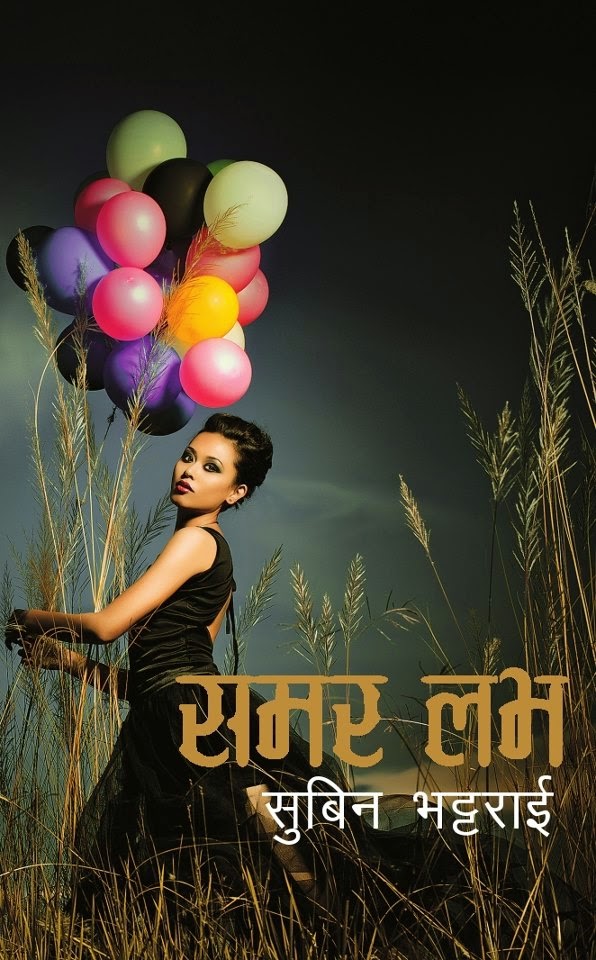
The novel, it has already been mentioned, begins with the irritating and overused technique of some character offering to unload their life experiences on the writer. The author would have done well to skip this part. The moment the character, Atit (also the protagonist, no surprises there) begins reciting his tale, though, the story picks up. There are a bit of hiccups in the beginning, with the author struggling to introduce the characters, give readers a feel of the setting, explore his feelings, and so on. Once that is done, it is almost smooth sailing. The characters come alive, they interact and joke and go on excursions, they make friends with each other and sit for boring classes and travel in city buses. Readers, especially young ones, will become hooked to this realistic portrayal, which could be happening in any of our lives.
Just as the love between Atit and Saya could be sprouting in the hearts of any of the readers. The initial awkwardness, the gradual friendship and intimacy, the tenderness, the spats and quarrels – the incidents might be long drawn-out, but they are mostly justified, as they let the readers follow the tale of love with ease. Bhattarai writes in clear, lucid, slick prose, not much unlike the simplicity that Narayan Wagle, and then Buddhisagar, displayed in their fiction. It is the language we think and speak in. But the difference is that Bhattarai’s approach is even more fresh, his characters are almost all young and unformed, their dialogues are what any collegiate would speak. His ability to pick people off the streets and make them talk on paper is his biggest strength. The lingo of the youngsters, their thought processes, the way they gorge on pani puris, chiya and churot, log onto Skype at the drop of a hat, shoot pictures for a Facebook profile, spend nights texting each other, drink wildly before an amorous night – it is so now, so today, so us. It is what has almost never been explored in a full-length novel in the Nepali language, though plenty of stories have done so.

It would be difficult to talk of the plot without revealing it, for it moves ahead in a linear fashion, capturing the romance with glimpses of strained family relations and combined field-works. The subject-matter itself is not a page-turner by any stretch of imagination, but by the time the romance develops into a full-fledged affair, readers are emotionally attached to the protagonists, they actually want to know where it all goes. When a character’s proposal is accepted, they are elated, and when the lovers suffer, it will make them want to protect the fragile relation. And after all this, after readers go through anxious waitings and sleepless moments along with the protagonists, the writer decides to disappoint them with the climax, which is anticlimactic to say the least. We might forgive him for this, though, and agree that it adds to the overall contemporary feel and style of the novel.
But what we cannot forgive him for is the tediousness that he sometimes insists on thrusting into the pages. The almost obsessive desire to record the amount of money spent, whether Rs 27 for tea or Rs 400 for snacks, is definitely bothersome, it sounds like the diary of an efficient accountant. Similar is the case of his insertion of minute details, such as the time for the train’s arrival or the name of his dormitories or a discussion on buff and egg – the superfluous information will make readers want to scream. The writer’s constant repetition of certain matters also takes away from the novel’s charm – there are half a dozen instances of girls smiling at boys, often appearing in consecutive paragraphs. The blow-by-blow account of super-boring stuff is uncalled for.
Apart from the tendency to harp on inconsequential matters, or stretch a negligible incident into something huge, the author has mostly kept to the topic. He has done a commendable job with his characters, allowing them to grow and develop and express. Saya, especially, is very life-like, with her wilfulness and strength. One cannot help feeling, however, that although Atit is a likeable, affectionate, appreciative boyfriend, there is a lot of auto/biographical characteristic embedded in him, and hence the need to always prove him the hero. With this issue come attached the issues of misogyny, a palpable feature in all kinds of fiction authored by males. This novel is not an exception, laying the blame much too easily and squarely on a female’s shoulders, dubbing them as vague and ambiguous, commodifying and objectifying them. The glimpses of misogyny are not out of context or exaggerated, but not particularly comforting either, particularly from a young writer.
The young author should also have paid better care to the way he used English words in the novel. There is an abundance of English words, which is quite natural when used in dialogues. But English could have been left out in the rest of the narration, specially because a few words have been lousily used. Substituting ‘combine study’ for ‘combined studies’, ‘Maconvince bhayen’ for ‘convinced’ and saying ‘frusted’ instead of ‘frustrated’ is simply not done. Also, once, Saya is opening the ‘bottom’ of Atit’s shirt instead of the ‘button’. For the linguist it will take away from the pleasure of the lovemaking scene, not that it is well-written in the first place, it is one of the the few places where the writer lapses into grandiose words and expressions, spoiling the contemporary feel. Leaving that apart, the novel has been well-edited, with barely half a dozen typos, although the sentences are sometimes so staccato you wish they had been left as they were instead of being brutally cut midway.
All these flaws, though, are minor when compared with the risk the writer has decided to take, by writing in a mater-of-fact language that could be lambasted for its lack of ornamentation. Those who complain on the flippant language should wait till the latter pages, where the writer has displayed his brilliant writing skills. A three-page long outpouring of the protagonist’s heart will leave readers with goosebumps, it is packed with so much raw feelings. The pain and the longing are tangible, they make you want to reach out and hug the character, they remind you of people who have wronged you, and also those you have deceived. Also, young readers will simply love the retorts between the characters, the sarcasm, the undertones, as relations fall apart and are built anew. For this is the way we think, we talk, we act.

And that is why, in the end, Summer Love is the story engraved in the heart of each and every collegiate, the story many think of jotting down, but which only Bhattarai has managed to write.
Book review by Richa Bhattarai. She blogs here.Listen Summer Love online Here
Subscribe to:
Posts
(
Atom
)


